Indoor mold is more than a cosmetic problem. Mold growth usually indicates that excess moisture is present somewhere in the building, whether from a plumbing leak, roof leak, water damage, condensation, elevated humidity, or another moisture source.
People respond to mold differently. Some people may experience no symptoms, while others may develop allergy-like or respiratory symptoms. The CDC notes that damp and moldy environments may cause stuffy nose, sore throat, coughing, wheezing, burning eyes, or skin irritation. People with asthma, mold allergies, chronic lung disease, or weakened immune systems may be more sensitive.
For homeowners, the important goal is not to determine how “dangerous” mold looks. The priority is to identify the moisture source, correct it, and properly address the mold growth.
What Is Black Mold?
The phrase “black mold” is commonly used to describe mold that appears dark green, gray, brown, or black. However, color alone cannot tell you what species of mold is present or how it may affect someone.
One mold frequently associated with the term black mold is Stachybotrys chartarum. But many different molds can appear dark, and mold should not be considered harmless or dangerous based solely on its color.
CDC guidance emphasizes that if mold is visible or there is a persistent moldy odor, the important step is to address the mold and the moisture condition allowing it to grow.
Why Does Mold Grow Indoors?
Mold spores naturally exist in both indoor and outdoor environments. The spores themselves become a building problem when they land on damp materials and have enough moisture to begin growing.
Common moisture sources include:
Plumbing leaks
Roof or window leaks
Water-damage events
Leaking showers or tubs
Dishwasher or refrigerator supply-line leaks
Wet drywall or insulation
Condensation on walls or windows
Poor bathroom ventilation
Elevated indoor humidity
Moisture beneath flooring or cabinets
Mold can grow on drywall, wood, insulation, carpet, wallpaper, fabrics, ceiling materials, dust, and many other building materials.
When a water loss occurs, drying the affected materials quickly is important.
The EPA recommends cleaning and drying damp or wet building materials and furnishings within approximately 24–48 hours to help prevent mold growth.
Simply wiping up visible water may not be enough.
Moisture can remain hidden:
Behind baseboards
Inside wall cavities
Beneath cabinets
Under flooring
Inside insulation
Beneath carpet and padding
Around plumbing penetrations
Inside ceiling cavities
Professional moisture detection can help determine whether affected materials have actually dried.
What Does Mold Look and Smell Like?
Mold can appear in many different colors and textures.
You may notice:
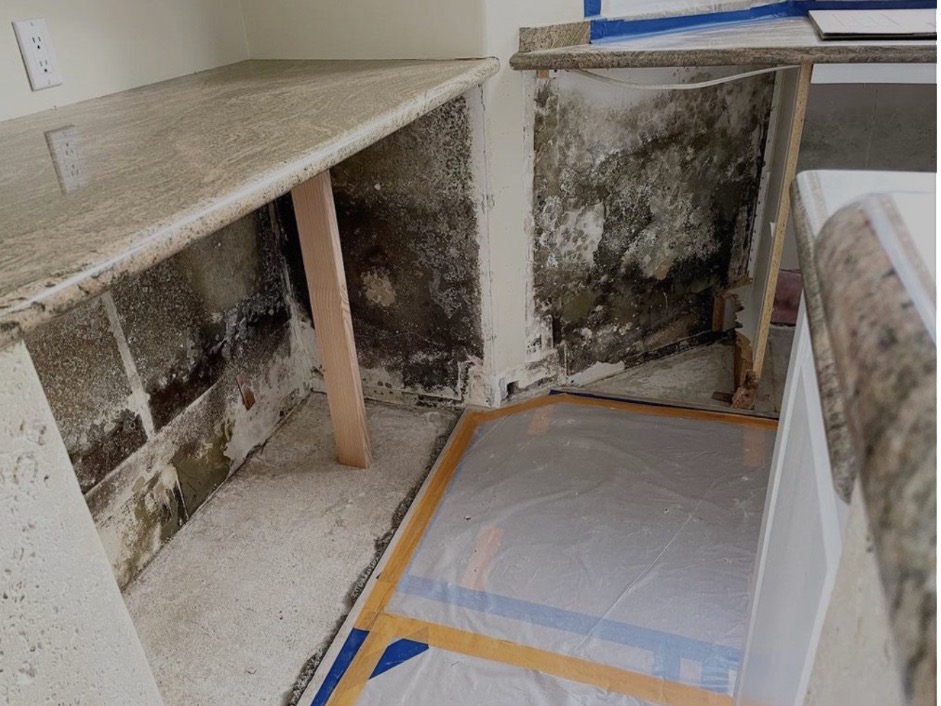
Black or dark spotting
Green or gray growth
White or fuzzy growth
Discoloration on drywall
Growth on framing or cabinets
Staining around plumbing fixtures
A persistent musty odor
A musty smell can also indicate hidden microbial growth even when mold isn’t immediately visible. EPA notes that a moldy odor can be a reason to investigate the building for possible mold growth.
Possible Health Effects of Indoor Mold Exposure
People can respond very differently to the same indoor environment.
According to the CDC and EPA, possible symptoms associated with mold exposure can include:
Stuffy or runny nose
Sneezing
Sore or irritated throat
Coughing
Wheezing
Red or irritated eyes
Skin irritation or rash
Worsening asthma symptoms
Mold can also irritate the eyes, nose, throat, skin, and lungs of people who are not allergic to mold.
Symptoms such as fatigue, dizziness, headaches, concentration problems, gastrointestinal symptoms, or other generalized complaints can have many possible causes. They should not automatically be attributed to mold exposure.
Anyone experiencing persistent, severe, or concerning symptoms should consult a qualified healthcare professional.
Mold Exposure and Adults
Adults with asthma, respiratory conditions, mold allergies, or weakened immune systems may be more sensitive to damp or moldy environments.
For mold-allergic individuals, exposure may trigger allergic symptoms. People with asthma may experience worsening respiratory symptoms or asthma attacks.
Mold-remediation professionals address the building and moisture problem. Medical symptoms should be evaluated by an appropriate healthcare provider.
Mold Exposure and Children
Children can also experience allergy-like or respiratory symptoms in damp or moldy environments.
CDC notes that research has found associations between indoor mold exposure and upper-respiratory symptoms, coughing and wheezing, and asthma symptoms in people who already have asthma. Some research has also suggested an association between early mold exposure and the development of asthma in susceptible children.
Parents concerned about a child’s symptoms should discuss them with the child’s pediatrician rather than assuming mold is the cause.
At the same time, visible indoor mold and persistent moisture should still be corrected regardless of whether anyone is experiencing symptoms.
What About Mycotoxins?
Some molds can produce substances known as mycotoxins under certain environmental conditions.
However, the presence of mold does not automatically mean that mycotoxins are present, and you cannot determine whether mycotoxins are present simply by looking at the mold.
EPA explains that mold can produce allergens, irritants, and in some cases potentially toxic substances, but also notes that symptoms beyond allergic and irritant effects are not commonly reported from inhaling indoor mold and that research continues in this area.
For homeowners, the practical recommendation remains the same:
Address the moisture source and properly remediate unwanted indoor mold growth.
Can Mold Affect Pets?
Pets share the same indoor environment as the rest of the household, so they should be kept away from active mold growth, contaminated materials, and remediation work areas.
It is especially important to keep pets away from moldy food, pet food, garbage, compost, or other decaying food material. Veterinary sources document that some molds growing on food or feed can produce mycotoxins capable of causing serious illness in animals if ingested.
If a pet develops respiratory symptoms, vomiting, tremors, unusual behavior, skin problems, or other concerning symptoms, contact a veterinarian. Do not assume that indoor mold is necessarily the cause.
Why Moisture Control Matters
Removing visible mold without correcting the water source is rarely a long-term solution.
A complete approach should identify conditions such as:
Plumbing leaks
Exterior water intrusion
Shower or tub leaks
Poor ventilation
Condensation
Elevated humidity
Wet insulation
Damp concrete
Moisture trapped beneath flooring
Previous water damage that was never completely dried
The EPA states that if mold is present, homeowners should both clean up the mold and correct the water problem. Otherwise, mold growth can return.
When Professional Mold Remediation May Be Needed
A small amount of mold on a hard, easily cleaned surface can sometimes be handled by a homeowner.
Professional remediation may be appropriate when mold:
Extends into drywall, insulation, cabinets, or flooring
Covers a larger area
Is located inside wall or ceiling cavities
Results from significant water damage
Continues returning after cleaning
Produces a persistent musty odor
Requires demolition to access affected materials
Involves multiple rooms
Requires containment and HEPA filtration
Professional remediation may include containment, negative air pressure, HEPA air filtration, controlled removal of affected materials, HEPA vacuuming, detailed cleaning, antimicrobial treatment when appropriate, and moisture-source correction.
Mold Remediation in Orange County and the Inland Empire
Mold Fix Inc. provides professional mold remediation and water-damage services throughout Orange County, the Inland Empire, and surrounding Southern California communities.
Our approach focuses on identifying affected building materials, controlling the work area, removing contamination when necessary, cleaning affected surfaces, and helping determine the moisture condition that allowed mold growth to occur.
If you discover visible mold, experience a persistent musty odor, or have had recent water damage, Mold Fix can evaluate the affected area and explain the appropriate next steps.
Call Mold Fix Inc. at (949) 449-5949 or request a free estimate online.